How to Help Prevent Car Theft
No product makes a car theft-proof. What works is layering — making the vehicle a slower, noisier and less attractive target at every stage, from the street to the signal to the recovery effort.
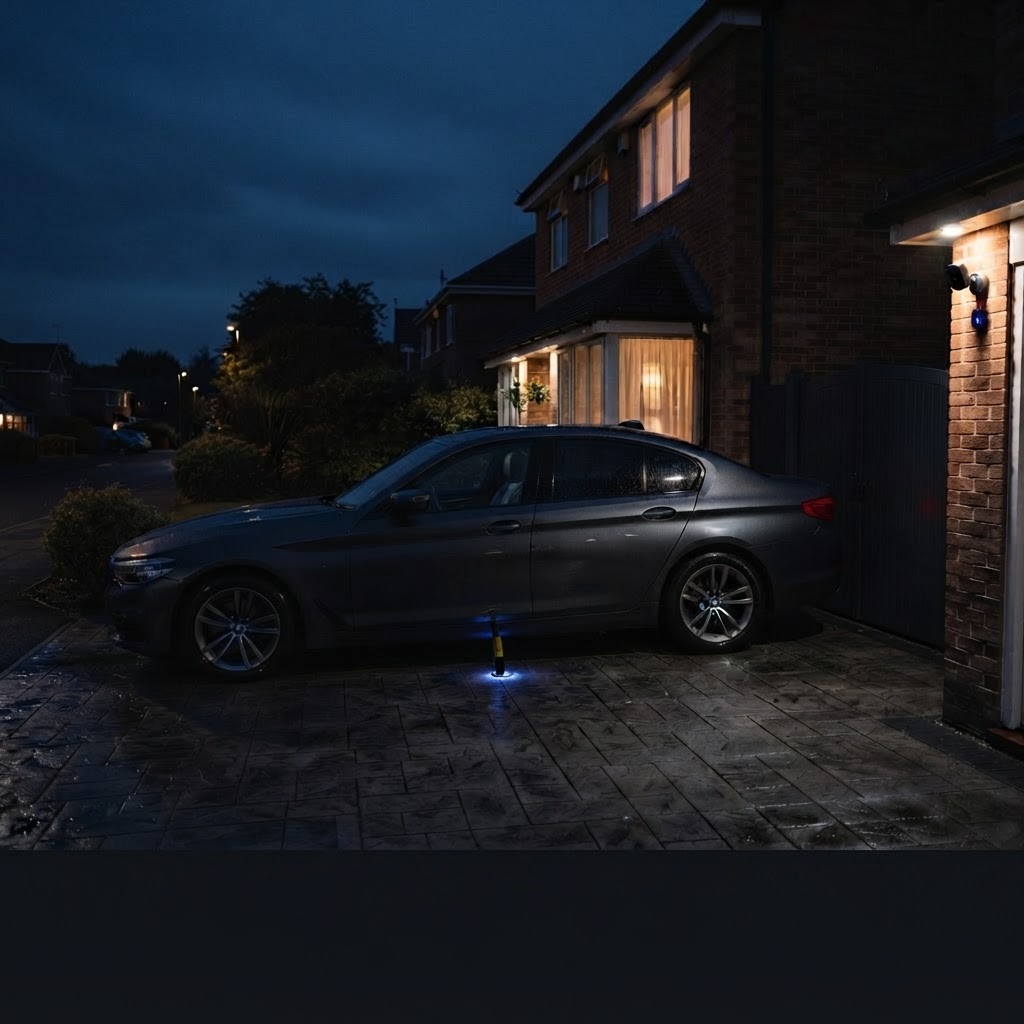
In short: reduce the opportunity, add visible physical security, strengthen the electronics, and improve detection and recovery. Each layer can reduce risk and add another obstacle. Nothing here is guaranteed to prevent all theft — the aim is to make your vehicle a harder target than the next one.
The layered security model
Four layers, working together. The diagram shows them as concentric rings around your vehicle.
Layered vehicle security model
- Deterrence — Make the vehicle a less attractive target.
- Physical security — Slow down or block an attacker.
- Electronic security — Protect keys, signals and onboard data.
- Tracking & recovery — Locate and recover if the worst happens.
What to do at each tier
Reduce opportunity
- Remove valuables and sweep the cabin
- Lock and manually check the doors
- Close all windows and sunroof
- Park in a visible, well-lit location
Add visible physical security
- Fit a tested steering-wheel lock
- Install a driveway post or locked gate
- Add wheel or pedal protection where appropriate
Strengthen electronic security
- Block keyless fob signals
- Confirm the alarm and immobiliser work
- Protect the OBD port
- Apply manufacturer software updates
Improve detection & recovery
- Fit a tracker
- Enable movement and geofence alerts
- Record vehicle details and photos
- Keep insurer and police contacts available
Key and fob security
Keys are the simplest route into a vehicle. Keep them away from doors, windows and letterboxes. For keyless fobs, use a signal-blocking pouch and test it regularly. Many fobs can switch their wireless signal off — check your handbook for the sequence for your model. Vehicle crime has fallen recently — see the latest official car-theft statistics — but keyless methods remain a concern.
For more detail, read how keyless relay attacks work.
Physical deterrents
A visible physical barrier adds time and noise. A tested steering-wheel lock, a wheel clamp, or pedal protection forces an attacker to carry extra tools and spend longer at the scene. Look for independently tested products rather than the cheapest option.
Physical security works because most theft is opportunistic. A car that takes longer to defeat is often skipped for an easier one nearby. These steps are part of the approach in our complete UK car theft guide.
Driveway, garage and parking security
Where you park changes the risk. A locked garage is strongest; a driveway with a locked gate or a retractable post is next. On-street parking under a street light and within view of a window or CCTV is better than a dark side street.
If you use a public car park, choose one with CCTV, lighting and pedestrian flow. Reversing into a space so the front wheels are turned also makes towing the vehicle harder.
Vehicle alarms and immobilisers
Modern vehicles have a factory alarm and immobiliser. Confirm both work — test the alarm, and check the immobiliser prevents the engine starting without the recognised key. An aftermarket Thatcham-rated alarm or immobiliser can add protection for older vehicles.
OBD protection
The OBD port can be used to program a new key. An OBD port protector covers the connector; relocating or hiding the port is a further option on some vehicles. This layer matters most for models known to be targeted with electronic key-programming attacks.
Trackers and recovery support
A tracker does not prevent theft, but it can support location and recovery after a vehicle is taken. Movement and geofence alerts can tell you quickly that something is wrong, which matters because the first minutes after a theft are critical.
Read our guide on choosing a car tracker before buying a device, and see how MotR Secure fits this layer.
CCTV and lighting
Good lighting and a visible camera reduce opportunity and support evidence. A motion-activated light over the driveway, a doorbell camera, or a dedicated CCTV camera covering the parking area all help. Ensure the system records to the cloud or a hidden storage device so footage survives a theft.
Security for second-hand vehicles
When you buy a used car, you do not know who else holds a key or has had access to the OBD system. Have the keys reprogrammed where possible, ask a specialist to check for unauthorised devices, and reset any telematics or connected-services accounts left by the previous owner.
Precautions when selling a car
When selling, never hand over the keys until payment has cleared. Meet at your home or a public place rather than letting a stranger drive off "for a test" with your keys. Remove all personal data from infotainment systems and disconnect any linked accounts before handover.
Night-time checklist
A short routine that covers the highest-impact steps. Print it and keep it by the door.
Printable checklist
Night-time vehicle security checklist
What not to rely on alone
- A single measure that 'guarantees' protection
- The assumption that a keyless car locked itself
- A cheap, untested steering lock
- Relying on a tracker alone — it helps recovery, not prevention
We avoid phrases like "theft-proof", "guaranteed recovery" or "prevents all theft". No honest security product can promise that.
Continue exploring vehicle security
Car Theft UK
The main hub: methods, figures and prevention in one place.
ReadCar Theft Statistics
Official ONS and Home Office data, clearly explained.
ReadKeyless Car Theft
How relay attacks work and how to block the signal.
ReadCar Tracker Guide
Tracker technology, costs and features before you buy.
ReadMotR Secure
MotR Secure is the fourth layer — detection and recovery. Live location, movement alerts and recovery support work alongside the key, physical and electronic security you already use.
Tracker hardware, installation and subscription details will be confirmed before launch.