Car Theft in the UK: What Drivers Need to Know
Vehicle crime in the UK covers several different offences. Understanding what the official figures actually count — and how modern cars are taken — helps you judge the real risk and the protection worth considering.
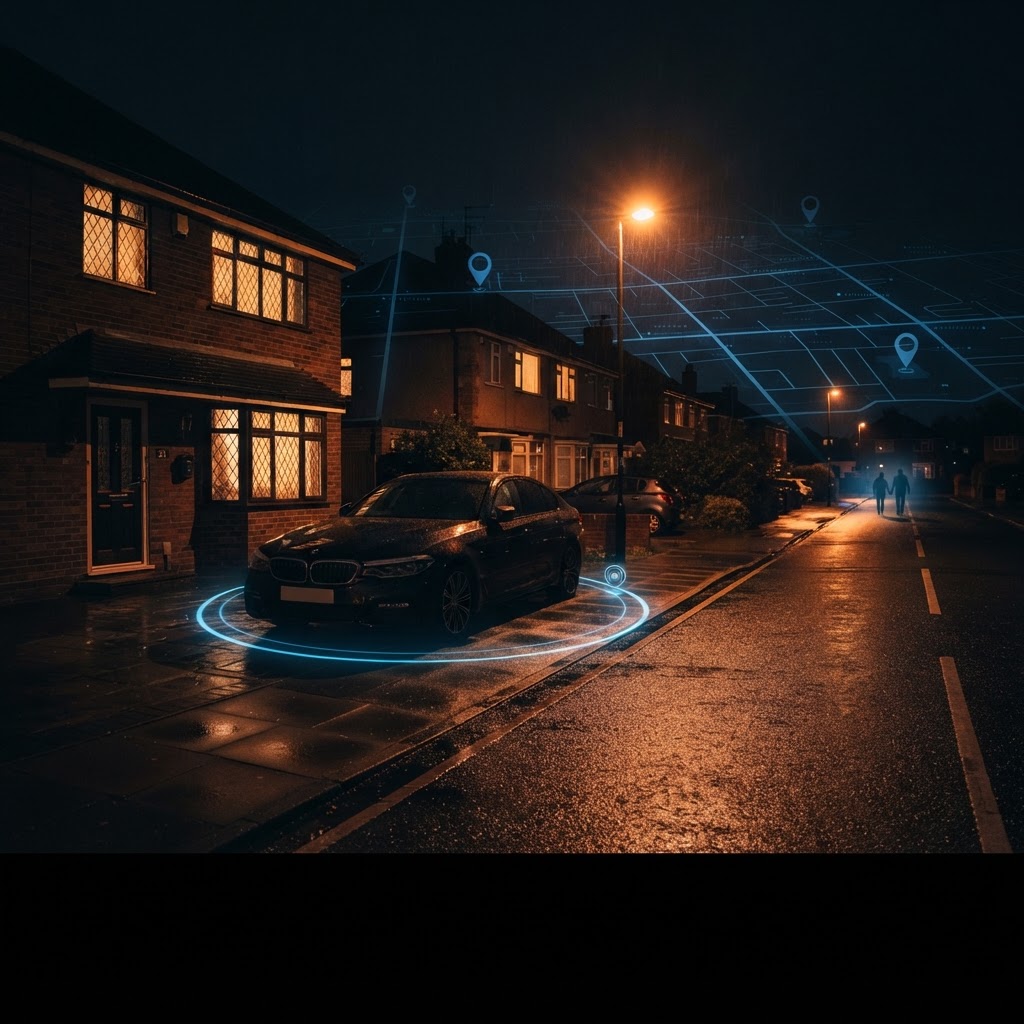
In short: UK police recorded 312,250 vehicle offences in England and Wales in the year ending March 2026 — 11% lower than the previous year. That figure is not the number of cars stolen. It includes theft of a vehicle, theft from a vehicle, aggravated vehicle taking and interference. The most reported modern methods are keyless relay attacks, key theft during burglaries, and electronic attacks on a vehicle's onboard diagnostics port.
What the headline figure actually measures
The 312,250 figure is a count of police-recorded vehicle offences, not a count of stolen cars. Treat it as a measure of vehicle-crime volume across several offence types.
Vehicle offences include theft of a motor vehicle, theft from a vehicle, aggravated vehicle taking and vehicle interference. This figure must not be described as 312,250 cars stolen.
of vehicle offences were closed with no suspect identified
England and Wales, year ending March 2026. This outcome measure covers the wider vehicle-offence category and does not establish an individual vehicle's recovery likelihood.
For a full breakdown of what each figure counts, see the latest UK car theft statistics.
What counts as a vehicle offence?
Official UK crime statistics group several different offences under the heading "vehicle offences". Reading the headline as "cars stolen" overstates the problem and misrepresents the data.
- Theft of a motor vehicle — the vehicle itself is taken.
- Theft from a vehicle — items are stolen from inside or off the vehicle.
- Aggravated vehicle taking — a vehicle is taken by force or in a way that causes injury.
- Vehicle interference — an attempt to enter or interfere with a vehicle, whether or not anything is taken.
A single stolen car can generate more than one offence — for example the theft of the vehicle and a later attempt to interfere with it. That is why offence totals and outcome rates are not the same as a recovery rate.
Theft of a vehicle vs theft from a vehicle
Theft of a vehicle means the car itself is stolen — the offender takes the whole vehicle, usually to sell it, strip it for parts, or use it to commit further crime.
Theft from a vehicle is far more common. The vehicle stays where you left it, but possessions, catalytic converters, number plates, or fitted parts are taken. Many thefts from vehicles are crimes of opportunity: a visible laptop, a jacket on the seat, or an unlocked door.
The protection that helps is different for each. Theft from a vehicle is reduced by removing valuables and locking the car. Theft of a vehicle is reduced by making the car harder to start and move — keys, signals, immobilisers and physical locks.
How modern cars are stolen
Modern vehicles are harder to hot-wire than older cars. Most thefts now exploit the key, the key signal, or a diagnostic connection rather than a broken ignition barrel.
Keyless relay theft
A relay device captures and re-transmits the signal from a keyless fob inside the home so the car unlocks and starts.
Full guideKey theft and burglary
Keys taken from a hallway, hallway table or handbag during a burglary remain a direct route to stealing the vehicle.
OBD and electronic attacks
The onboard diagnostics port is used to program a new key or bypass the immobiliser in a matter of minutes.
Signal jamming
A blocker stops the lock signal reaching the car. The driver walks away assuming it is locked; it is not.
Keyless relay theft
Vehicles with passive, or "keyless", entry detect the key fob when it is close. Press a button and the car unlocks; press the start button and it drives away — no key ever leaves your pocket.
The convenience comes from the fob constantly broadcasting a short-range signal. Two people with relay devices can capture that signal through a wall and re-transmit it to the car on the driveway. The car believes the key is present and unlocks. The whole process can take under a minute.
Read the dedicated guide on how keyless relay theft works for the four-stage attack, signal-blocking pouch testing, and how to turn off the fob's wireless signal on many models.
Key theft and burglary
Despite the focus on electronic theft, stealing the keys directly is still common. Keys left near the front door, on a hallway hook, or in a handbag by the entrance are the target during many car-key burglaries.
"Fishing" through a letterbox with a rod or hook is a known technique. Once the keys are in hand, the car is driven away without any electronic workaround needed.
Keep keys out of sight of doors, windows and letterboxes. A locked key cupboard or a drawer away from the entrance is a simple, effective step — part of a broader approach to how to help prevent car theft.
OBD and electronic attacks
The onboard diagnostics (OBD) port gives access to a vehicle's computer. Legitimate workshops use it for servicing and diagnostics. Thieves can use the same port to program a blank key to the car, then drive away as if the key were genuine.
An OBD port protector — a physical cover that locks over the port — is a low-cost way to slow this attack. Some vehicles also allow the port to be relocated or hidden. None of these are foolproof, but they add time and effort for an attacker.
Signal jamming and unlocked vehicles
A signal jammer broadcasts noise on the frequency used by your key fob. When you press "lock", the car never receives the command. You walk away; the car stays open. It is a crime of opportunity rather than a targeted theft of your specific vehicle.
The fix is a habit, not a product: press the button, then physically check a door handle before you walk away. Listen for the lock, and watch for the indicators. It takes two seconds and defeats the technique entirely.
A practical prevention hierarchy
No single measure makes a car impossible to steal. Layered security slows an attacker down at every stage, which is what actually reduces risk.
1. Reduce opportunity. Remove valuables, lock and manually check the doors, close the windows, and park somewhere visible.
2. Add visible physical security. A tested steering-wheel lock and a closed gate are seen before an attack even starts.
3. Strengthen electronic security. Block the key signal, protect the OBD port, and keep software up to date.
4. Improve detection and recovery. A tracker with movement alerts can support location and recovery if the worst happens — see our UK car tracker buyer's guide before choosing a device.
What to do if your vehicle is stolen
1. Report it to the police. Call 101, or 999 if you witness the theft or a crime in progress. Get a crime reference number.
2. Tell your insurer immediately. Have your policy number, the registration, and the crime reference ready.
3. Start the tracker. If the vehicle has a tracker or a service like MotR Secure, contact the provider to begin location and recovery support. Explore MotR Secure for live location and recovery support for your vehicle.
4. Record the details. Note the time you last saw the vehicle, any CCTV covering the location, and distinguishing features or modifications.
Keep vehicle details, photos and the VIN somewhere accessible now — not after a theft.
Continue exploring vehicle security
Car Theft Statistics
Official ONS and Home Office data, clearly explained.
ReadKeyless Car Theft
How relay attacks work and how to block the signal.
ReadPrevent Car Theft
A practical four-tier UK vehicle-security checklist.
ReadCar Tracker Guide
Tracker technology, costs and features before you buy.
ReadMotR Secure
MotR Secure adds a detection and recovery layer to the security model above — live location, movement alerts and recovery support. It complements, rather than replaces, physical security and careful key handling.
Tracker hardware, installation and subscription details will be confirmed before launch.
Where these figures come from
Police-recorded vehicle offences and Crime Survey vehicle-related theft estimates measure different things and should not be combined into a single total.
- ONS — Crime in England and Wales (latest)Headline police-recorded vehicle-offence figures and trends. https://www.ons.gov.uk/peoplepopulationandcommunity/crimeandjustice/bulletins/crimeinenglandandwales/latest
- ONS — Crime in England and Wales, year ending March 2026The specific March 2026 quarterly bulletin referenced across this cluster. https://www.ons.gov.uk/releases/crimeinenglandandwalesyearendingmarch2026
- ONS — Appendix tablesDetailed offence-by-offence breakdown tables. https://www.ons.gov.uk/peoplepopulationandcommunity/crimeandjustice/datasets/crimeinenglandandwalesappendixtables
- ONS — Police Force Area data tablesGeographic breakdown by police force area. https://www.ons.gov.uk/peoplepopulationandcommunity/crimeandjustice/datasets/policeforceareadatatables
- ONS — User guide to crime statisticsVehicle-offence definitions and counting rules. https://www.ons.gov.uk/peoplepopulationandcommunity/crimeandjustice/methodologies/userguidetocrimestatisticsforenglandandwales
- Home Office — Crime outcomes in England and WalesOutcome data — charge, no-suspect and closure rates. https://www.gov.uk/government/statistics/crime-outcomes-in-england-and-wales